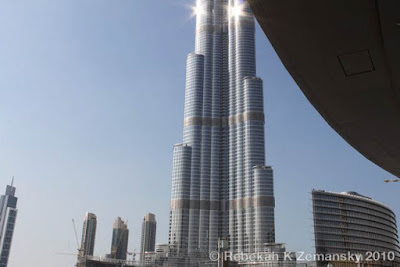
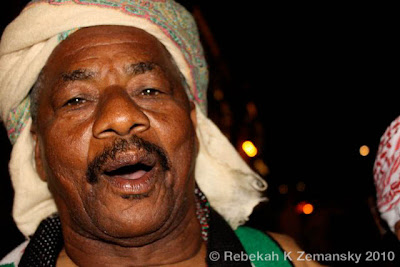
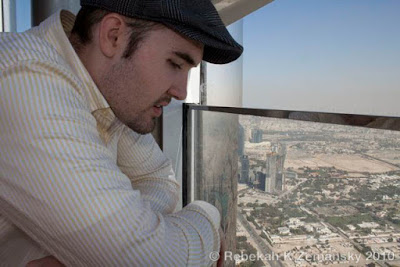
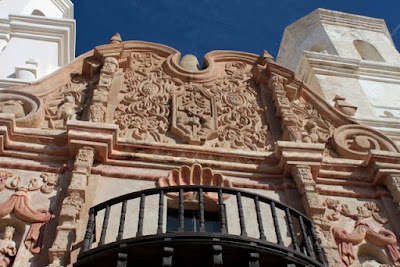
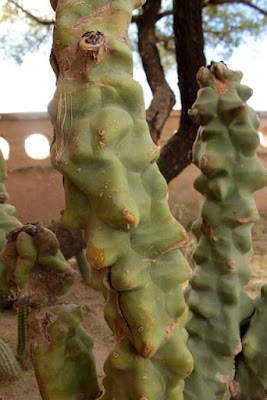
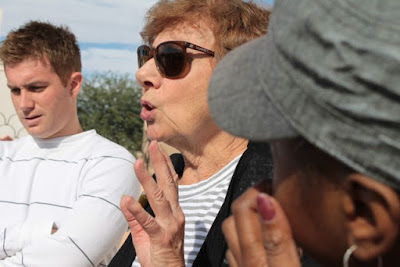
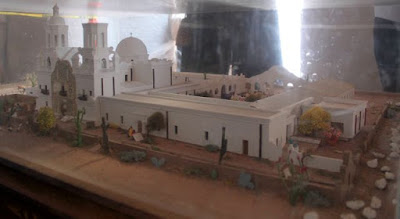
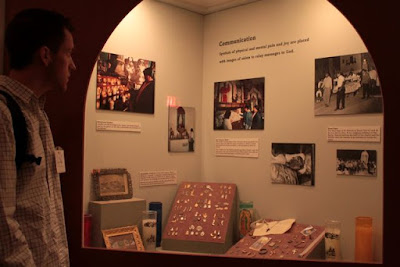
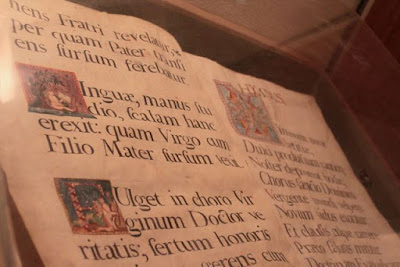
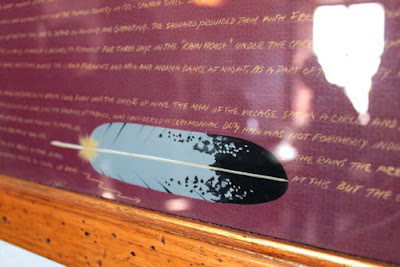
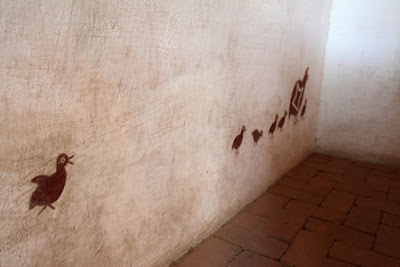
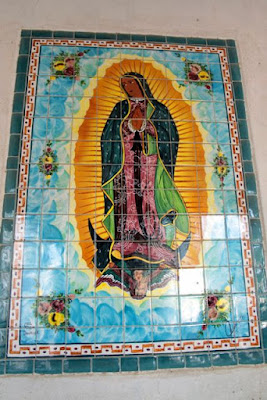
“Pictures of pictures” is my attempt at a catchy name for photos of artwork. In other words, any image I’m taking a picture of – a painting, a sculpture, a document, stained glass – sometimes even another photo. One reason to do this is to remember the information, though usually it’s to remember the image itself. This is probably the one I plan the least – often, I don’t realize what I’ve done till afterward. Plus, it’s not quite as clear cut a category as, say, people, or planes. At the time, I’m thinking, “Oh, wow – I want to see this again!” or “That is so cool, I want to remember it!” Some trips generate crazy amounts of “pix of pix” or POP photos; other trips, just a handful or none at all. Museums are great for this, and also graffiti, billboards, and even advertisements.

Surprisingly, I’ve already turned up a number of pictures from Phoenix, partly due to my summer photography class and partly to researching historical neighborhoods for class. There was even enough for a whole post just on Rosita’s. Many of the remaining POP photos fell into two categories – ones I’d taken for my summer photography class and ones I’d taken for class assignments in the journalism program.

Photography class

First, playing with a borrowed DSLR at night. I took an awesome online photography class from Karen Russell. I needed a DSLR to take the class, difficult on a student budget. In a deeply generous move that made taking the class possible, I was loaned a Canon Rebel. The experience was amazing. I learned so much from the class, the camera, and the combination. There’s a whole new photographic world out there I knew nothing about which now fascinates me! This is a downtown building, Trinity Cathedral, which lights up nearly every evening for at least a few hours. I wanted to try to capture the windows.

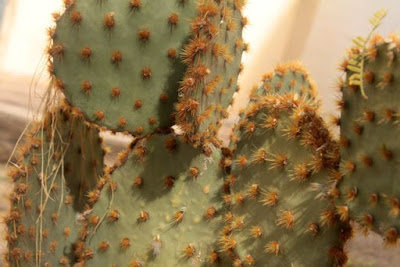
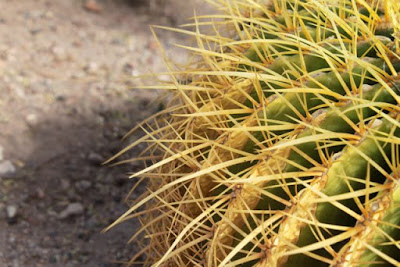
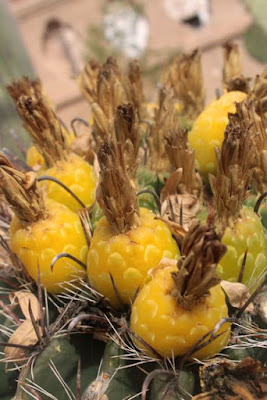
Another lesson of photography class (which also bled neatly into journalism) was to notice the details. That lesson had me taking a few pictures like these before I knew our first photo assignment for our media class.

From Abstracts
From Abstracts

Now, for me, photography’s a learning experience, one I’ve far from mastered! But that’s the thing about learning – it’s a journey itself, and for this case, the picture to remember it by are built right in.

Steven and I discovered Rosita’s by chance when we visited in May. We were going in circles after a long day, not particularly optimistic day of apartment hunting. Something about this place caught our attention, and inside we found a cozy space with bright artwork and a pond complete with fountain and fish. The staff is great, and the food – amazing (but don’t just take my word for it). We vowed not only to come back but also to bring anyone who visits us – we’ve already managed to take two of my classmates, and somehow end up there at least once a month on a date. Favorite places like this are part of what turns a city into a home, and I’m glad I have pictures already. Hopefully there will be more taken at Rosita’s (and in Phoenix overall), and not just from next summer when I plan to take my parents on their visit. (They’ll be long past due – this sort of food food is one of the few things NOT available in Taupo, NZ)

Anyway, in a near-future post, I’ll be back to my informal photo categories with my most flexible imaginary category, “pictures of pictures” or POP. At first, I was going to include one Rosita’s picture in that larger post. Then, as I browsed through the last month’s material for that one good picture of Rosita’s, I found one and then another… and another… and another… And realized Rosita’s probably deserves a post of its own in more ways than one. And now, on to the photos…

From Phoenix
From Phoenix
From Phoenix
From Phoenix
From Phoenix
From Phoenix
From Phoenix
From Phoenix
From Phoenix
From Phoenix
From Phoenix

Aaron Brown has two jobs. By day he’s a mild mannered journalism professor at ASU’s Walter Cronkite School in downtown Phoenix. By night (or at least, by summer) he jets all over the world from Mozambique to Jordan for his PBS series “Wide Angle.”

OK, so maybe a slightly exaggerated version of the truth. Regardless, this evening he combined the two and spoke to a mostly student group about journalism, interviews, and broadcasting from abroad. He emphasized the importance of finding compelling characters to tell the story, and gave tip like to use silence for drawing out “the most honest thing” from your interview. “if you’ve spent time with me, you’ll know I think television enters through your stomach and works its way to your brain,” said Brown, adding that for his stories he needs “a visceral reaction.”

This can be tricky when working overseas, because along with the expenses and tight scheduling, it’s difficult to do all the same pre-reporting that’s possible on your home turf, Brown said. The pressure is higher, too, because “you know you may not get a second chance at something” whether it’s filming or recording. In response to student questions about the changing media world, Brown said “the best way you can make yourself valuable is to learn something.” Reporters should “go find good stories, go find good characters – if you want to worry, worry about that – the rest can take care of itself – but you all need to be better at that, finding good material.”

In the interest of full disclosure, I’m not unbiased when it comes to Brown. One of the odd ways in which my parents influenced me is by mentioning, frequently, the people they appreciate. I heard very often how they’d watch Brown in their Seattle days. It’s been some time and changes since then. I never expected that someone I grew up hearing about this way would be someone I’d actually seen in person let alone pass in the hallway on a regular basis, and it leaves me a little more tongue tied than it’s cool to admit. Yet one of the things I’m growing to appreciate about journalism and reporters is that so far, all the ones I’ve met are more than willing to sit down and talk about what they do. Brown is no exception to that precedent, and once again, I felt I learned a lot.

Thanks to The East Valley Tribune for the picture above.

Looking at pictures and following links – and possibly calling it research for my multimedia class when it was really procrastinating video editing for my broadcast class – brought me suddenly to this. Stunning, stunning photography – an amazing example of technical and emotional photographic skill. Also, of travel photography – not to mention a great story.

Thailand
Brought back (or sent back) from a photographer in Thailand to a British publication, these photos show people and practices that most of us will never see in person. Without this work, and the work of everyone at Times Online, how many of us would even know the Moken existed?

They’ve made the news before, like this CBS News piece after the 2004 Indian Ocean tsunami. There’s also features like the later National Geographic’s April 2005 issue, a general online article and a pdf article about religion from Phuket Magazine, and a technical approach in this piece at Cyber Diver Digital Media Network (CDNN).

There’s even YouTube video: a stand-alone piece on the effects of the tsunami and a 5-part series posted by rjwiik called The Moken Kabang Project Spring (it’s in Norwegian but the stunning visuals speak for themselves). I went ahead and embedded Part 1 below as a teaser.

A little online research turns up an translation of their name as “people of the drowning” and how UNESCO’s concern for the protecting the traditional Moken lifestyle has designed a project for “integrating the traditional knowledge of the Moken into the region’s sustainable development.”

Lastly, I’ve a brief comment (and a link) on word choice. While I don’t know how the Moken prefer to be called, the term gypsies isn’t without controversy, especially in Europe. I’m still learning, but a friend of mine who works at the European Roma Rights Center brought it to my attention when I asked about her new job. More information can be found on their site.

1886 IndoChina map

radio

So the timing of this Must See Monday could not have been better – in the middle of the radio segment of broadcast, sound is a big topic on all of our minds lately. This week’s speaker, Susan Feeney is Senior Editor for Planning at All Things Considered.

Why is this relevant to travel? Well, I probably inherited the itchy feet and restless nature, but I might have gotten the idea that I could tie this into making a living from somewhere else. As I listened to the clips Feeney brought as examples, I was transported back to how I felt when I was a kid and the radio, especially NPR, first started to take me places. Growing up without reliable television reception meant I spent a lot of time listening to radio in the house, as well as in the car; I heard news long before I got older and interested in newspapers. The drive to school, five minutes early on but, as I got older and switched around a bit, up to half an hour, meant morning updates. Road trips meant frantic searches on the radio dial for the next public broadcast station, because static and station boundaries always seemed to hit just at the good parts.

ofmic

One of the reporters I remember most is Sylvia Poggioli – her stories and, even more, her frequent signoff from Rome, sunk deep into my memory and imagination, even as she continues to broadcast.

Now, I still put radio on whenever I’m in the car. However, a bike commute means I drive much, much less and the unexpected (and probably only) downside means much, much less radio.

It was startling, after just a semester, to see how differently I could listen to a radio piece. Feeney’s discussion of each piece, and radio in general, really made the presentation even deeper. Information, like behind the scenes information like what happened to the journalists reporting on the earthquake from China, how their stories got put together, or the reaction afterward made good listening. But they helped us understand how reporters operate in tense, emotional, possibly dangerous situations and still get their jobs done. These examples also illustrated some of the differences between radio and other formats, especially the discussion of whether the family’s search for their son would have been different in print or television.

RadioAntennaes

Feeney played a piece on Hurricane Katrina by Robert Siegel to discuss accountability journalism, a piece which also happened to have very little natural sound, but a high emotional impact for many listeners.

She also played two pieces from a series by Melissa Block that took place in Sichuan province, China. The first actually recorded the 2008 earthquake that hit Sichuan province and the second documented a couple’s search for family members. A third piece, which I came across on NPR’s website, has Block’s follow-up work one year later in pictures as well as sound.

Overall, while I wish I had more time in radio this semester, an evening listening to/with Feeney is the perfect way to keep me interested in sound – and set the bar very, very high for anyone who wants to get involved.

mic2

HopgoodSite

So for this post, I borrowed the base from my Cronkite Conversation, expanded, and still feel like I only scratched the surface of all the ideas that came up. Anyway, journalist and author Mei-Ling Hopgood was on campus early this week. She currently lives and works in Argentina’s capital, Buenos Aires, and talked about living between the challenges of changing journalism as well as the challenges of living abroad.

Hopgood spoke several times over the last few days, including a Monday lunch, an evening discussion and in at least one class. I really appreciated her stories, thoughts, and insights on journalism, working from abroad, and on transitioning to writing books. For freelance journalists (whether by choice or circumstance), Hopgood advised keeping busy with projects and ideas so that you “always have something and something coming.”

For those who want to go abroad, she recommended going less comfortable, where you can find under-covered stories and stand out from the crowd. Technology has made it possible to write and keep up with media almost anywhere, and really opened up new places (and therefore new stories, to go along with the new platforms and traditional reporting skills taught at places like the Walter Cronkite School). In Hopgood’s case, location is Buenos Aires. When pitching stories from abroad, look for local connections so that your story becomes “local news abroad.” Those who work and report from other countries get a different experience than a tourist gets, Hopgood said, emphasizing that it’s important to learn as much as possible before going. The reward is that reporters are “licensed” (whether officially or by curiosity) to go ask questions and may end up in places they wouldn’t see if they were just visiting. She also emphasized how much learning the language of the area you want to cover will make an impact – without it, the language barrier will make finding some things out tricky.

Hopgood2
Hearing how the transition into books began, with Hopgood applying her journalism background to her own personal story, really painted a picture of how to approach a very personal story and a very different project than newspaper or magazine articles. Hopgood said she knew the basic facts of her adoption from Thailand all her life, and wrote about it for the first time in an article around the time she began to learn more about her birth family. For the book, there were longer outlines and a lot more writing, but also the usual fact checking. There were extra ethical dilemmas when working with sensitive material and her own personal stories, but Hopgood said her experience kicked in again to help her navigate challenges and get the story. Her portfolio of writing didn’t hurt when it came to getting her book picked up, either, by showing her award winning skills to a new audience. Now part of the publicity tour includes – writing articles that cover new angles of her book material (as well as planning much of her own publicity and logistics – probably familiar ground for most freelancers!).

Perhaps most importantly from Hopgood’s advice – write regularly!

All in all, I’m really looking forward to reading “Lucky Girl” and the next book Hopgood is working on, about parenting around the world. Luckily while I wait for one to arrive in the mail and the other to be released, I don’t have to wait to get started: check out this in-depth piece for Dayton Daily News, Casualties of Peace.

For more on Hopgood’s thoughts on Argentine media, check out Alyssa at The World Beat.

And here’s Hopgood’s home page.

For more amazing photos including Buenos Aires, check out lrargerich on flickr.
buenosaires3

TNTlogo

the Good: Harbour Bridge goes green for a day

Did you know there’s an official website for going green? I didn’t. It has Al Gore.

Anyway, whether they checked the website or not, Sydney is on the green ball with what may become an annual event – in case bridge climbing isn’t exciting enough already.

(In other news, despite my initial excitement, this Nathan Rees is not the Premier of New South Wales, and this Nathan Reese does not seem to have Twitter…).

the Bad: Karadzic hoping to call the shots as he defends himself

As the BBC explains, war crimes first became an international legal issue after WWII with the Nuremberg trials, so named the city where they were held. Now international trials are held at the International Court of Justice in The Hague.

Karadzic is actually being tried by the International Criminal Tribunal for the former Yugoslavia (ICTY), also in The Hagu. A similar tribunal set up for the 1994 genocide, the International Criminal Tribunal for Rwanda (ICTR). It’s worth noting that all three websites are available in both English and French (the original language of diplomacy), and the ICTR is also available in Kinyarwanda with contact addresses listed in Kigali, Rwanda, and Arusha, Tanzania as well as The Hague.

Both courts are pursuing open investigations as well as trials; the ICTY is still trying to locate Ratko Mladic for trial and Idelphonse Nizeyimana was just apprehended and extradited for trial by the ICTR. Recent reports on the aftermath of war crimes appear from time to time, often on anniversaries of important dates, proving that these events have long lasting effects.

the Ugly: Botched facelift puts pyramid’s world heritage status at risk

World Heritage sites all over the world are monitored by UNESCO, and unfortunately they’re reconsidering how to handle a site in the Bolivian Andes after repairs were attempted on the pyramid there. Only two other sites – Oman’s Arabian Oryx sanctuary & Dresden’s Elbe Valley- have ever been removed from UNESCO’s registry, both because of man made changes. As UNESCO decides, Bolivia Web may be a good forum for seeing what people are saying.

The church where the ceremony was held had this really interesting aperture.

2006-01-06-#07 2006-01-06-#07

More importantly, the wedding was gorgeous and elegant, and two friends of ours are now starting a trip of their own, including a Jamaica honeymoon, and hopefully visits back and forth from anywhere we all end up. I borrowed these pictures from my boyfriend and date for the event, Steven.

2006-01-06-#07 2006-01-06-#07 2006-01-06-#07

The weather was in the mid to upper 50’s there (and in the upper 90’s to 100’s when we got back to Phoenix!), the Wichita wind was high, the Rockies were stunning as always.

We stayed at the Hotel at Old Town, which already has an impressive website (including virtual tours, slideshows, etc.), to I’m going to link you there and just show you my favorite detail, as well as a clue to how it’s made:

2006-01-06-#07 2006-01-06-#07

Finally, mad props to United. Yes, I may still complain about the delay and Denver’s ad crazy WiFi. But I’m a pilot’s daughter, and a good preflight is ESSENTIAL. Our pilots on Sunday caught a problem on the ground, while the flight crew kept us informed and the airline set us up with a new plane and got us on our way again. Here’s to safety checks, hydraulic pumps, and to making it home, safe.

(extra credit: please identify which of the photos below are from Denver area and which from Wichita…)

And that’s it for the moment – Mexico and Wichita in the same week, and the meantime, everything here kept going, full steam, so I’m back to going full blast in Phoenix…

2006-01-06-#07 2006-01-06-#07 2006-01-06-#07

Travel is not limited to the new & exciting – sometimes it’s returning to a place that’s familiar. As the White Stripes song says, I’m going to Wichita this weekend, for a wedding.

I’ve had family here all my life, and some of my earliest memories are of playing in my Grandma’s garden and my Grandpa’s workshop, and their little blue house on Sheridan. Time’s passed, many of us are in new places, and the paint has faded and peeled. Still the city itself doesn’t seem to change significantly, a plains city riding the business winds of the airlines providing much of Wichita’s industry base.

Anyway not so many picture/story opportunities yet, mostly running around with flights and rental cars and hotels and trying to get assignments and grading done in between, but I’ll give you what I’ve got so far, from the airport

Twitter Link

Follow me on twitter at http://twitter.com/bexz24/.

Flickr Photos

2009-10-07-#29

2009-10-07-#32

More Photos


December 2009
M T W T F S S
« Nov    
 123456
78910111213
14151617181920
21222324252627
28293031  

Where Everyone’s From